






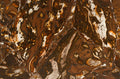


A stone phone case sounds like a contradiction at first. Stone is heavy, stone is hard, and stone breaks – so how is that supposed to work on a phone you carry around all day? These are the questions we hear most often, and they deserve straight answers rather than marketing lines. Here is what a real stone phone case from ROXXLYN weighs, how it behaves in everyday life, and what it feels like in your hand.
How heavy is a real marble phone case?
Our cases weigh approx. 40 g. That surprises most people, because they picture a solid block of marble. The stone on the back is not a block, though – it is a veneer just 0.8–1.2 mm thick. The rest is a lightweight frame. In daily use, a real marble phone case feels about as light as an ordinary case: you notice the material when you touch it, not when you lift it.
The same goes for slate, quartzite and lapis lazuli. The weight is set by the thin veneer and the frame, not by the type of stone.
How a stone phone case is built
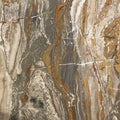
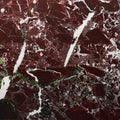
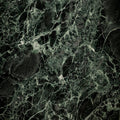
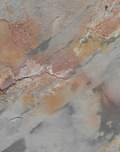
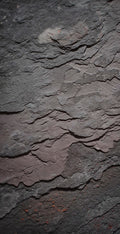
- The veneer: genuine stone, cut wafer-thin to 0.8–1.2 mm. Marble, quartzite and lapis lazuli are polished; slate stays split and keeps its natural texture.
- The flexible carrier layer: the stone sits on a flexible backing. This is the key difference from a rigid piece of stone – the veneer works together with the case instead of standing on its own.
- The frame: on our classic cases, a Black Frosted Case in Bayer TPU with a raised edge and an Alcantara lining. On the Case Pro, a whisper-thin TPU frame in five satin colours, with a lens ring and buttons in CNC-milled aluminium.
Every piece is made by hand in Germany, and every piece is one of a kind: the photos in the shop show an example, and the veining on your veneer will run differently.
Do marble phone cases break?
The honest answer: stone is a natural material, and no stone is unbreakable. But a veneer on a flexible carrier layer does not behave like porcelain. Porcelain is rigid and brittle – once it cracks, it shatters. A thin veneer bonded to a flexible backing is far more forgiving in daily life: pockets, bags, being put down on a table, the occasional knock.
What can happen: a hard, unlucky impact right on an edge or corner may leave a small chip or a hairline crack in the stone. We won't promise you drop-test results, because every fall is different. What we can promise is what happens next.
The raised edge and the TPU frame
The TPU frame takes the first contact, not the stone. On the classic cases, the raised edge sits slightly above the display, so the screen doesn't lie flat on the table when you put your phone face down. On the Case Pro, the aluminium lens ring stands slightly proud, so your iPhone never rests on its camera, and cut-outs in the corners help cushion impacts.
If the stone does get damaged: the Stone Passport
Every case comes with a Stone Passport. It carries its own number and the origin of the stone – and it includes 12 months of breakage cover from delivery, in addition to the statutory warranty. If your veneer breaks in that time, you are not left on your own with it. All the details are on the Stone Passport page.
What does a stone phone case feel like?
This is where the stones differ most, and where it pays to choose deliberately.
Slate: matt, textured, grippy
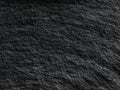
Slate isn't polished; it stays split. The surface is finely layered, matt and dry to the touch – so grippy that the case sits securely in your hand. It also hardly shows fingerprints. If you want to feel stone every time you pick up your phone, the Slate Case Black Rock is the clearest example.
Marble: polished, cool, smooth
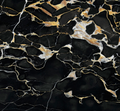
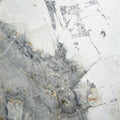
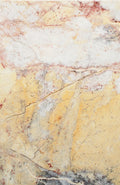
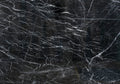
Marble is polished. It feels cool when you first pick it up, smooth under your fingertips, and it reflects the light. The veining is the main event – from the white lines on deep black in the Marble Case Nero Marquina to the golden-yellow veins of Nero Portoro. Polished surfaces show fingerprints more readily than matt slate; a soft, dry cloth is all it takes.
Quartzite and lapis lazuli
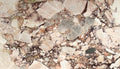
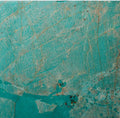
Black Venom, the quartzite in our Case Pro series, looks almost glassy when polished and is denser and more scratch-resistant than marble. Lapis lazuli is ground and polished until the blue glows from within and the pyrite inclusions sparkle. Like marble, both feel smooth to the touch.
Wireless charging with a stone case
Wireless charging works through the case. MagSafe is not built in as standard: if you want magnetic accessories to hold, you can add MagSafe magnets as an optional add-on in the configurator.
Who a stone case suits – and who it doesn't
A stone phone case suits you if you want a light everyday case that looks and feels like no other, and if you like the fact that no two are the same. It is not the right choice if you are after a rugged outdoor case with guaranteed drop protection. For most people the realistic picture is simple: about as light as an ordinary case, tougher than its reputation, and covered by the Stone Passport if the unlikely happens.
To see which models fit your phone, browse all iPhone cases: the classic cases fit iPhone 13 up to 18 Pro Max including iPhone Air, and the Case Pro fits iPhone 18 Pro Max, 18 Pro, 17 Pro Max and 17 Pro.