




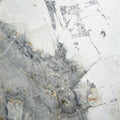
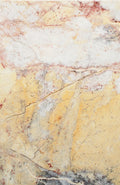



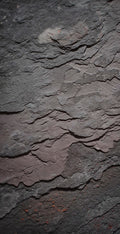




A marble watch with a genuine stone dial is a different thing from a watch with a marble look. Under the glass sits real stone, not a printed disc – which is exactly what makes every marble dial watch unique, and why it pays to know a few things before you buy. This guide explains how a stone dial is made, what sapphire glass and a quartz movement mean in practice, and how to pick the case colour that suits you.
How a marble dial is made
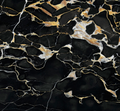
A dial is only a few centimetres across and has to be very flat. Using marble means grinding the stone wafer-thin, so that it fits into a slim case without losing its character. On our Marble Watch · Nero Marquina, that stone is Nero Marquina marble from Spain: deep black, veined with white. The case measures Ø 40 mm and just 8 mm in height, and the watch weighs 90 g. It is made by hand in Germany.
The design is deliberately reduced. Nothing competes with the stone – the marble is the design.
Why every stone dial watch is unique
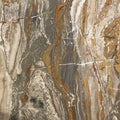
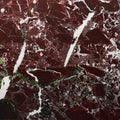
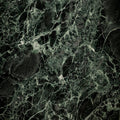
Marble forms over an immensely long time, and the white veins in Nero Marquina never run the same way twice – not in the block, not in the slice, not in the finished dial. So when you buy a marble watch, you do not receive the exact watch in the product photo. You receive your own piece: the photos show an example, and the grain of yours will be different. One dial may carry a bold vein from edge to edge, another a fine web of lines.
For many people, that is the whole point. A mass-produced watch looks identical on every wrist; a stone dial exists only once. Every piece also comes with a Stone Passport carrying its own number and the origin of the stone.
What to look for in a marble watch
Real stone or print?
Ask about the material and where it comes from. A serious maker names the stone and its country of origin. Another good sign is a clear statement that every piece looks different – a print could not honestly claim that. You can read more about the stones we work with on our stones page.
Sapphire glass or mineral glass?
The glass protects the dial, and with a stone dial that matters even more. Mineral glass is hardened glass: common and affordable, but more prone to scratches in daily wear. Sapphire glass is considerably harder and therefore highly scratch-resistant; it usually stays clear for years. No glass is unbreakable, but for a watch you wear every day, sapphire is the more durable choice. On the Marble Watch, the marble dial sits under sapphire glass.
Quartz or automatic?
Both have their place. An automatic movement is purely mechanical, winds itself with the motion of your wrist and appeals through its craft; it needs regular servicing and tends to build a little taller. A quartz movement runs on a battery, keeps very accurate time, needs little attention and allows slim cases. If you do not wear a watch every day, you will appreciate that it still shows the right time whenever you pick it up. The Marble Watch uses a Swiss Ronda 762 quartz movement, shock-protected – which is why the case can be just 8 mm slim.
Case and bracelet
Check that case and strap belong together. On the Marble Watch both are stainless steel: a link bracelet in the same colour as the case.
Which colour suits you?
The dial is always Nero Marquina – black with white veins. Your choice is the stainless steel case, and it changes the character of the watch noticeably:
- Black: tone on tone with the stone. Calm and unified, and the white veins stand out most.
- Gun: a dark metallic grey. Softer than black, understated and easy to wear with anything.
- Silver: the classic contrast. Clean and precise, and a natural match for silver jewellery.
- Gold: warm and dressy. Black and gold is a strong pairing that works well with gold jewellery.
A simple rule: follow the metal you already wear most – a ring, a chain, your glasses. If you are unsure, Black and Gun are the quietest options. You will find every colour in the marble watches collection.
A marble watch for women and men
At Ø 40 mm, 8 mm high and 90 g, the Marble Watch is slim and light, and sits well on narrow and broader wrists alike. It is designed as a unisex watch: there is no men's or women's version, only the colour you choose.
A stone watch as a gift
A marble watch makes a personal gift precisely because no other one looks quite the same. A few practical points:
- Colour: notice which metal the person wears day to day. When in doubt, Black is the most neutral choice.
- Expectations: mention that the dial is one of a kind, so its own veining becomes part of the story.
- Timing: orders usually leave the workshop within 1–3 working days.
- Peace of mind: you have the statutory 14-day right of withdrawal, and the Stone Passport includes 12 months of breakage cover from delivery, in addition to the statutory warranty.
In short
Three things matter in a marble dial watch: genuine stone with a traceable origin, a glass that protects it well, and a movement that fits your routine. After that it comes down to taste – and the case colour. The Marble Watch combines Nero Marquina from Spain, sapphire glass and a Swiss quartz movement in a slim case, made by hand in Germany.